Student use is ahead of policy
Students need judgment around AI-generated answers, synthetic media, search disruption, credibility, creators, algorithms, plagiarism, and digital identity.

Looking for the Dadspotting Trends Report - www.thinkstart.ca
A focused resource hub for principals, vice-principals, superintendents, curriculum leads, technology leads, and professional learning teams who need a practical way to address AI, media literacy, online trust, and future-ready learning.
You may not need another article explaining that AI is changing education. You need a clear way to decide what your students, staff, and parent community should hear next.
Think Start helps school and board leaders turn the AI conversation into practical learning: what students should understand, how teachers can use AI responsibly, what parents need explained, and how leadership can avoid both panic and performative innovation.
Use this page to brief your team, compare program formats, and decide whether a school session, staff PD workshop, parent night, or leadership briefing is the right starting point.
Students are using AI tools. Teachers are experimenting unevenly. Parents are hearing headlines. Leadership is expected to respond with confidence, even when the rules, risks, and tools keep changing.
Students need judgment around AI-generated answers, synthetic media, search disruption, credibility, creators, algorithms, plagiarism, and digital identity.
Teachers need support that goes beyond tool demos: lesson planning, feedback, accessibility, assessment, communication, workflow, and classroom boundaries.
School leaders need plain-language resources that reduce fear, explain risk, and show families that the school is not asleep at the wheel.
This is not aimed at everyone. It is for education leaders who control calendars, budgets, PD priorities, assemblies, parent engagement, or board-level learning.
Need: A credible session that helps students and staff discuss AI responsibly.
Best fit: School assembly, classroom visit, or staff meeting workshop.
Need: Common language across schools before the conversation fragments.
Best fit: Leadership briefing, system-wide keynote, or PD day session.
Need: Practical AI literacy tied to learning, assessment, media literacy, and digital citizenship.
Best fit: Teacher PD, resource development, or program pathway planning.
Need: Human-centred adoption support so AI is not treated as only an IT rollout.
Best fit: AI readiness briefing, staff enablement session, or parent-facing explainer.
These are starting points for a school or board conversation. Each can be tailored by grade level, schedule, audience, and internal priorities.
A student-facing session on AI-generated content, misinformation, search disruption, online influence, creators, algorithms, credibility, and digital identity.
Teacher PD that moves past prompt tricks into responsible planning, classroom workflow, feedback, accessibility, assessment, and realistic use boundaries.
A leadership keynote or briefing that gives principals, trustees, and board teams a practical map of AI, trust, communications, work, and learning.
A school-hosted evening that helps families understand AI, online safety, scams, media literacy, and how to support students without fear-based messaging.
Mohit Rajhans brings 20+ years in media, digital communication, education, and AI strategy. The tone is plain English, practical, and built for rooms where not everyone agrees on AI yet.
| Proof point | Why it matters for schools | Link / note |
|---|---|---|
| National media commentary | Experience explaining AI, scams, online safety, and digital culture to public audiences. | Add clip link |
| Education experience | Adult education, classroom speaking, and teacher-facing AI literacy work. | Add overview link |
| Innovation speaker recognition | A polished speaker who can hold mixed audiences without drowning them in jargon. | Add proof link |
| Think Start Inc. | AI strategy and media literacy support focused on practical adoption, not software sales. | Visit site |
Use this section for short links a principal, VP, superintendent, or curriculum lead can forward internally. Keep every asset brief, practical, and tied to a booking decision.
Replace with a short video explaining the problem, the program options, and the easiest first step for a school or board team.
A forwardable PDF for principals, VPs, superintendents, curriculum leads, and PD planners.
A plain-language note schools can adapt when announcing an AI or media literacy session.
| Resource | Decision it supports | Format | Link |
|---|---|---|---|
| School leader email template | Forward the opportunity to a principal, VP, or head of school | Google Doc | Add link |
| Board / superintendent email template | Introduce a system-wide AI literacy or PD conversation | Google Doc | Add link |
| Program one-pager | Compare student, staff, leadership, and parent-facing formats | Add link | |
| Speaker / workshop deck | Help a decision-maker understand tone, topics, and fit | Google Slides | Add link |
| AI discussion starter questions | Help leadership frame what problem they are actually trying to solve | Google Doc | Add link |
Start with a short fit call. We will identify the audience, the pressure point, and the most useful format: student session, staff PD, leadership briefing, parent night, or a combined school/board pathway.
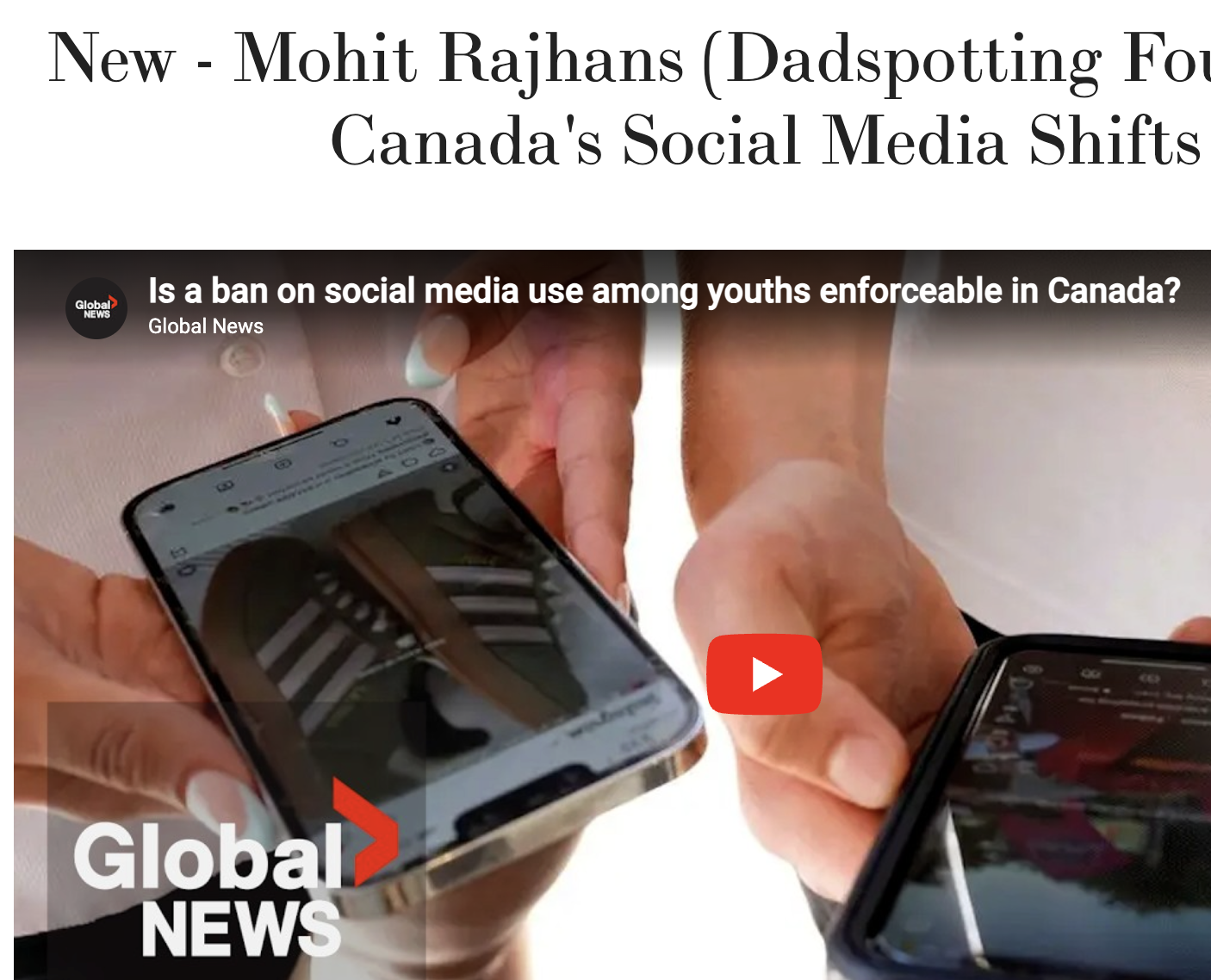
Canada Wants to Ban Social Media for Kids Under 16. Parents Need a Better Plan. Banning Kids From Social Media Is Not a Strategy. Teaching Them How It Works Is. The Social Media Ban Debate Misses the Bigger Problem: Kids Are Being Trained by AlgorithmsWhy Parents Should Care About Canada’s Under-16 Social Media Ban, Even If It Never Works
Since Australia enacted a social media ban for kids, a poll has shown Canadians would support similar action here. Global's Jazan Grewal speaks with tech and media analyst Mohit Rajhans about whether or not Canada should impose a youth social media ban, and the challenges that could come with such legislation. “The truth is the damage that’s been done by social media companies up until this point is in the past already,” Rajhans explained. “These are architected addiction systems that have actually done damage for many years, but moving forward, we can’t have the same rules – as there haven’t been rules.” A social media ban for young people under the age of 16 took effect in Australia in December. As of last week, the Australian eSafety Commission revealed a survey in which more than two-thirds of Australian parents reported their children were still on platforms included on the ban list.
Privacy leaks through prompts, Students paste personal details into AI tools without thinking. Names, school info, private situations, medical or family context, location hints. Once shared, you cannot “unshare” it.
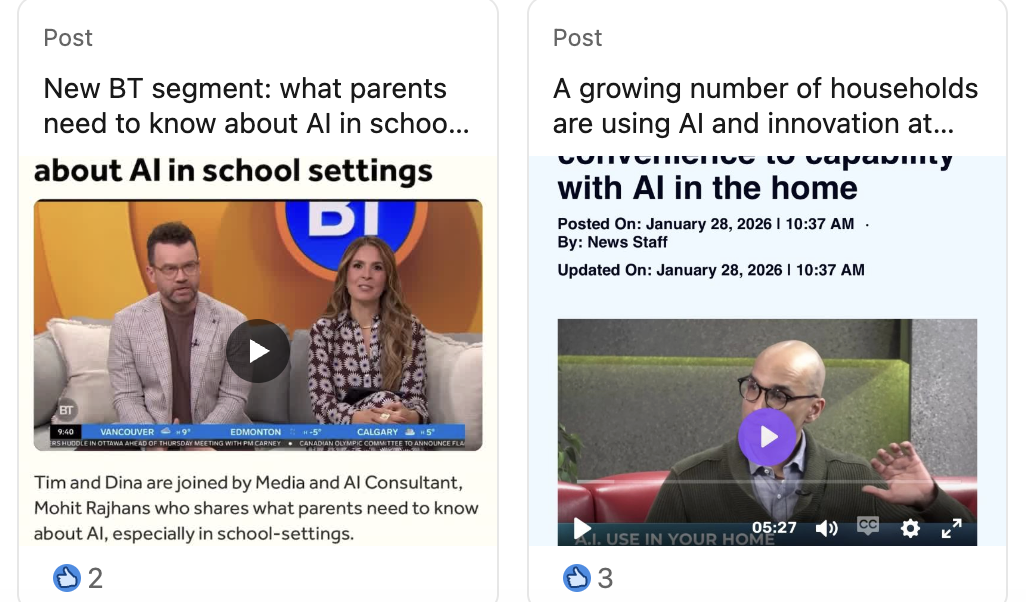
How do parents raise informed, curious, and safe kids in a world driven by algorithms? Shane Hewitt talks with Mohit Rajhans of Think Start about the realities of parenting in the age of AI — where education, entertainment, and misinformation often collide. They discuss the importance of media literacy, setting family tech boundaries, and helping kids understand the power and pitfalls of artificial intelligence. With insights on digital safety, school bans on cell phones, and AI’s growing role in learning, this conversation is a guide for parents looking to lead with awareness, empathy, and curiosity.
GUEST:Mohit RajhansDigital Strategy, AI Adoption and Leadership Consulting w/ Think Start Knowledge Network
Canada Wants to Ban Social Media for Kids Under 16. Parents Need a Better Plan. Banning Kids From Social Media Is Not a Strategy. Teaching Them How It Works Is. The Social Media Ban Debate Misses the Bigger Problem: Kids Are Being Trained by AlgorithmsWhy Parents Should Care About Canada’s Under-16 Social Media Ban, Even If It Never Works
Since Australia enacted a social media ban for kids, a poll has shown Canadians would support similar action here. Global's Jazan Grewal speaks with tech and media analyst Mohit Rajhans about whether or not Canada should impose a youth social media ban, and the challenges that could come with such legislation. “The truth is the damage that’s been done by social media companies up until this point is in the past already,” Rajhans explained. “These are architected addiction systems that have actually done damage for many years, but moving forward, we can’t have the same rules – as there haven’t been rules.” A social media ban for young people under the age of 16 took effect in Australia in December. As of last week, the Australian eSafety Commission revealed a survey in which more than two-thirds of Australian parents reported their children were still on platforms included on the ban list.
Privacy leaks through prompts, Students paste personal details into AI tools without thinking. Names, school info, private situations, medical or family context, location hints. Once shared, you cannot “unshare” it.
How do parents raise informed, curious, and safe kids in a world driven by algorithms? Shane Hewitt talks with Mohit Rajhans of Think Start about the realities of parenting in the age of AI — where education, entertainment, and misinformation often collide. They discuss the importance of media literacy, setting family tech boundaries, and helping kids understand the power and pitfalls of artificial intelligence. With insights on digital safety, school bans on cell phones, and AI’s growing role in learning, this conversation is a guide for parents looking to lead with awareness, empathy, and curiosity.
GUEST:Mohit RajhansDigital Strategy, AI Adoption and Leadership Consulting w/ Think Start Knowledge Network
Parenting in a Digital World can often mean sharing pictures, memories and information about each other. Mohit (Dadspotting.com) discusses some tactics to open conversations up about how your social media habits could be impacting your family.
Mohit Rajhans has been writing about parenthood for 15 years and ... CHCH-TV. CHCH-TV started broadcasting in 1954 and is proud to be the news .
Mohit Rajhans on the Data on Dads and the online resources available for Mental Health Support for Dads.